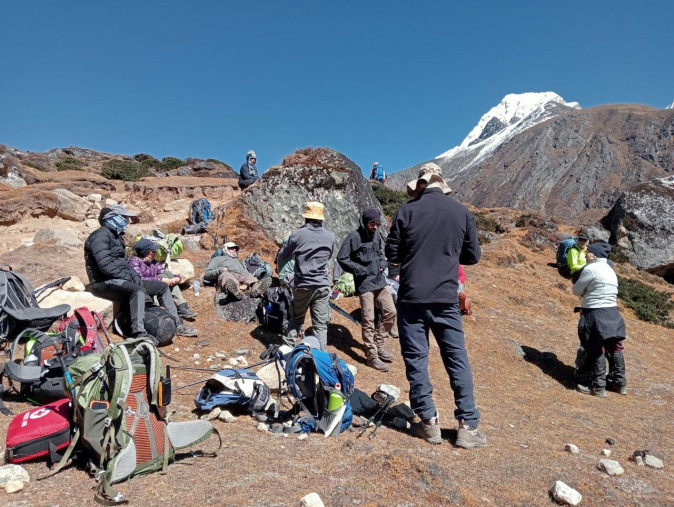
Symptoms of Altitude Sickness: How to Prevent It During a High Altitude Trek in the Himalayas
Trekking in the Himalayas is an unforgettable experience, but travelling to high altitude requires proper preparation and a sensible approach to acclimatization. One of the most important health concerns for trekkers is altitude sickness, also known as acute mountain sickness (AMS).
Altitude sickness can affect anyone, regardless of age, fitness level, or previous trekking experience. Even very fit and experienced trekkers can become unwell if they ascend too quickly. The good news is that altitude sickness can often be prevented or its severity reduced through a carefully planned itinerary, gradual ascent, proper rest, and close monitoring.
At Trek Ways Nepal, we consider acclimatization one of the most important parts of Trekking in Nepal. Our itineraries are designed not simply to take you to the destination, but to give your body enough time to adapt safely to increasing altitude.
What Is Altitude Sickness?
Altitude sickness occurs when your body does not adapt quickly enough to the lower oxygen availability at high elevations. As altitude increases, atmospheric pressure decreases and there is less oxygen available with every breath. Altitude sickness can occur at elevations above approximately 2,500 metres, although some people can experience symptoms at lower elevations and others may tolerate high altitude very well. Individual responses vary considerably.
There are three main forms of altitude illness:
• Acute Mountain Sickness (AMS) – the most common and usually the mildest form.
• High Altitude Cerebral Edema (HACE) – a rare but life threatening condition involving swelling of the brain.
• High Altitude Pulmonary Edema (HAPE) – a serious condition involving fluid accumulation in the lungs.
Most trekkers who experience altitude sickness develop mild AMS, which can improve with rest and acclimatization. However, symptoms must never be ignored because severe altitude illness can develop rapidly.
Common Symptoms of Altitude Sickness
The first symptoms of AMS can resemble an ordinary headache, tiredness, or stomach problem. This is why trekkers need to understand what to look for.
1. Headache
A headache is one of the most important symptoms of AMS, particularly when it occurs after gaining altitude. It may be mild at first but can become more uncomfortable.
2. Nausea or Vomiting
You may feel sick, lose your appetite, or experience vomiting. Some trekkers simply do not feel interested in food after reaching higher elevations.
3. Dizziness
Feeling light-headed, dizzy, or slightly unsteady can be a sign that your body is struggling to adjust.
4. Fatigue and Weakness
It is normal to feel tired after a long trekking day. However, unusual exhaustion, weakness, or a feeling that you have very little energy can be associated with altitude sickness.
5. Difficulty Sleeping
High altitude can disturb normal sleep. Some trekkers experience difficulty falling asleep or wake frequently during the night.
6. Shortness of Breath
Breathing becomes naturally more difficult at altitude, particularly during physical activity. However, unusual breathlessness at rest should be taken seriously.
7. Loss of Appetite
A reduced appetite is common at altitude. Nevertheless, eating enough nutritious food remains important because trekking requires considerable energy. The Wilderness Medical Society identifies headache accompanied by symptoms such as nausea, fatigue, dizziness, or vomiting as characteristic of AMS.
When Does Altitude Sickness Become Dangerous?
Mild AMS should never be allowed to progress by continuing to climb.
Two severe forms of altitude illness require immediate attention: HACE and HAPE.
High Altitude Cerebral Edema – HACE
HACE is a severe and potentially life-threatening progression of altitude illness. Warning signs can include:
• Severe or worsening headache
• Confusion
• Changes in behaviour or mental state
• Difficulty walking or loss of coordination
• Extreme weakness
• Unusual drowsiness
Difficulty walking normally or altered mental status is particularly concerning. Immediate descent is essential when HACE is suspected.
High Altitude Pulmonary Edema – HAPE
HAPE affects the lungs and can also become life-threatening.
Warning signs may include:
• Severe shortness of breath
• Breathlessness while resting
• Persistent cough
• Chest tightness
• Weakness
• Bluish lips or fingers
• Rapid deterioration
A person showing signs of serious altitude illness should not simply be given more time to "adjust." Descent is one of the most important emergency treatments. Oxygen may also be used where appropriate, but it should not delay necessary descent.
How Can You Prevent Altitude Sickness?
The most important principle is simple:
Go slowly and allow your body time to acclimatize.
There is no guaranteed way to prevent altitude sickness completely, but a properly designed itinerary significantly reduces the risk.
1. Follow a Gradual Ascent
Rapidly gaining altitude is one of the major risk factors for AMS. The Wilderness Medical Society recommends that, above 3,000 metres, trekkers generally avoid increasing their sleeping altitude by more than 500 metres per day, with an acclimatization day every three to four days. This is why a good trekking itinerary is about much more than the number of days required to reach base camp. A rushed itinerary may look attractive on paper because it is cheaper or shorter, but it can increase the risk of altitude illness and make the trekking experience much harder.
2. Climb High, Sleep Low
One of the most useful principles of Himalayan trekking is: "Climb high, sleep low."
During an acclimatization day, trekkers can walk to a higher elevation during the daytime and then return to a lower elevation to sleep.This gives the body additional exposure to altitude without unnecessarily increasing the sleeping altitude. We incorporate this principle into our trekking programs whenever the route and conditions allow.
3. Stay Hydrated – But Don't Overdrink
Drinking enough fluids is important because trekking, cold temperatures, dry mountain air, and physical exertion can all contribute to fluid loss.However, drinking excessive amounts of water does not prevent altitude sickness. The Wilderness Medical Society specifically notes that "forced" or excessive hydration has not been shown to prevent acute altitude illness. Drink regularly according to thirst and your body's needs, and maintain a balanced intake of fluids and electrolytes.
4. Eat Properly
Your body needs energy to adapt to altitude and to walk for several hours each day. We recommend eating regular meals containing carbohydrates, protein, vegetables, and other nutritious foods. Even if your appetite decreases at altitude, try to eat small, regular meals.
5. Walk Slowly
At high altitude, walking too quickly can make you exhausted and may make symptoms more difficult to recognize. A steady pace allows you to conserve energy and gives your body time to adjust. A good Trekking guide understands that the strongest trekker is not necessarily the person who walks fastest, but the person who manages their energy and altitude properly.
6. Avoid Alcohol and Excessive Physical Stress
Alcohol can interfere with sleep and may worsen dehydration. It is sensible to avoid alcohol during high-altitude trekking, particularly while your body is acclimatizing. Likewise, do not push yourself unnecessarily. Listen to your guide and your body.
Is Diamox Helpful for Altitude Sickness?
Yes. Diamox (acetazolamide) can be helpful in preventing acute mountain sickness.
Acetazolamide is one of the best-established medications for AMS prevention. Current Wilderness Medical Society guidance recommends it as a preventive option, particularly for people at moderate or high risk of altitude illness. It works differently from simply providing oxygen. Acetazolamide helps stimulate physiological processes that improve acclimatization. However, Diamox should not be considered a replacement for gradual ascent.
The best protection remains a sensible acclimatization schedule. Medication may be considered in addition to appropriate ascent planning, particularly for travellers with previous altitude sickness or those facing higher-risk ascents. Common side effects can include tingling or pins-and-needles sensations, increased urination, and changes in taste. Medication is not suitable for everyone, so travellers should discuss Diamox with a qualified doctor or travel-medicine professional before their trek. Do not self-prescribe Diamox solely. Your doctor can assess your medical history, allergies, medications, and individual risk before recommending it. Most importantly, Diamox does not mean that you can safely ascend rapidly. If you develop significant altitude illness, continuing higher simply because you are taking Diamox is not safe.
How Trek Ways Nepal Helps Minimize the Risk
Trek Ways Nepal believes altitude safety begins long before a trekker reaches the mountains. Our trekking itineraries are designed around acclimatization rather than simply covering distance.
Perfectly Planned Itineraries
We carefully design trekking programs with appropriate acclimatization days and sensible altitude gains. Rather than rushing trekkers from one destination to another, we allow time for the body to adapt. For popular Himalayan routes such as Everest Base Camp, Annapurna Circuit, Manaslu Circuit, and other high-altitude journeys, the itinerary is planned according to the altitude profile of the route.
Climb High, Sleep Low
Where appropriate, our guides use the climb-high, sleep-low principle. During acclimatization days, your Trek Ways Nepal guide may take you approximately 150–200 metres higher than the lodge where you are staying for a short acclimatization hike, depending on the route, weather, terrain, and the group's condition. For example, if the group is sleeping at one altitude, the guide may lead the group higher during the day, allowing the body to experience additional altitude before returning to the lodge to sleep. This is not a race or a test of strength. The purpose is controlled exposure and gradual adaptation.
Daily Monitoring by Our Guides
Our guides pay attention to how trekkers are feeling throughout the journey. Our guide will measure your blood oxygen level twice a day and note it to see the difference if any. We encourage trekkers to tell their guide immediately if they experience:
• Headache
• Nausea
• Dizziness
• Unusual tiredness
• Loss of appetite
• Breathing difficulties
• Poor sleep
• Any unusual change in physical or mental condition
Early communication is extremely important. A trekker should never feel embarrassed about telling the guide that they are not feeling well.
We Don't Ignore Symptoms
One of the most important principles at Trek Ways Nepal is that the itinerary can be changed when safety requires it. If a trekker develops symptoms of altitude illness, the appropriate response may be rest, stopping further ascent, medical assessment, or descent depending on the severity. Reaching Everest Base Camp or another destination is never more important than the health and safety of our guests.
Your Guide Is an Important Part of Altitude Safety
A professional Trekking guide with more than 10 years experienced does much more than lead the way along a trail. An experienced guide observes the group, understands the altitude profile, recognizes warning signs, controls the pace, communicates with lodges and the team, and knows when the itinerary may need to change. This is particularly important because altitude sickness can affect people differently. Fitness alone does not guarantee immunity from AMS. Even an experienced trekker can become sick at altitude.
Listen to Your Body
One of the best things you can do on a Nepal trek is to listen to your body. Do not try to hide symptoms because you are worried about delaying your group. Do not assume that a headache is simply caused by tiredness. And do not continue ascending if you have significant or worsening symptoms. The mountain will always be there. Your safety comes first.
Trek Smart, Trek Safely with Trek Ways Nepal
The Himalayas should be enjoyed at a comfortable and responsible pace. Proper acclimatization, a carefully designed itinerary, experienced guides, sensible walking speed, good nutrition, and appropriate medical advice can all contribute to a safer trekking experience. Our goal is not simply to take you to Everest Base Camp, Annapurna Base Camp, Manaslu, or another Himalayan destination. Our goal is to help you enjoy the journey safely and confidently.
Our approach is simple:
Plan properly.
Climb gradually.
Climb high, sleep low.
Listen to your body.
Communicate with your guide.
Never ignore altitude sickness symptoms.
With the right preparation and the right support, the Himalayas can become one of the most rewarding journeys of your life.


