Can Beginners Trek Everest Base Camp?
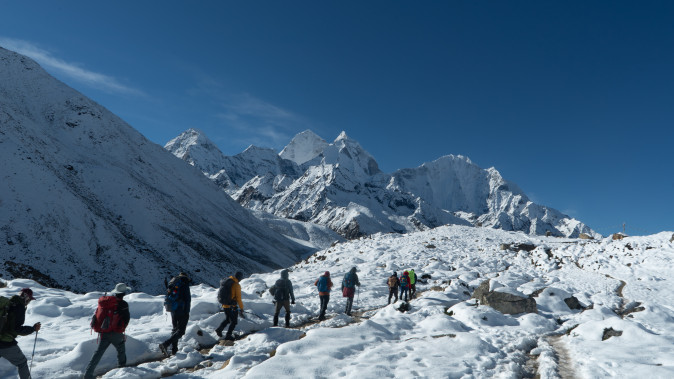
The Everest Base Camp Trek is one of the most famous trekking adventures in the world. Every year, thousands of travelers from different countries walk through the beautiful Everest region to reach the base camp of Mount Everest. A common question we hear from travelers is: Can a beginner trek to Everest Base Camp?
The answer is yes. You do not need to be an experienced mountaineer or a professional trekker to complete the Everest Base Camp Trek. However, being a beginner does not mean you can start without preparation. The trek is physically demanding because you will walk for several hours each day at high altitude. Good preparation, a suitable itinerary, a slow walking pace, proper acclimatization, and an experienced local trekking company can make the journey much safer and more enjoyable.
At Trek Ways Nepal, we believe that Everest Base Camp should not be rushed. Our itineraries are designed with a gradual ascent, enough time for acclimatization, and a comfortable walking pace to help your body adjust to the increasing altitude.
What Is the Everest Base Camp Trek?
The Everest Base Camp Trek takes you through the famous Khumbu region of Nepal, home to the legendary Sherpa people and some of the world's highest mountains. The journey begins with a flight from Kathmandu to Lukla, a small mountain town that serves as the gateway to the Everest region.
From Lukla, the trail passes through beautiful villages, forests, suspension bridges, Buddhist monasteries, and mountain valleys. Popular stops include Phakding, Namche Bazaar, Tengboche, Dingboche, Lobuche, and Gorak Shep. From Gorak Shep, trekkers walk toward Everest Base Camp and can also climb Kala Patthar for spectacular views of Mount Everest and the surrounding Himalayan peaks.
The trek is not technically difficult like a mountain climb, but the altitude makes it challenging. The highest sleeping point is generally Gorak Shep, at around 5,164 meters, while Kala Patthar rises to approximately 5,545 meters. Because of this elevation, altitude acclimatization is one of the most important parts of the journey.
Is Everest Base Camp Suitable for Beginners?
Yes, beginners can successfully complete the Everest Base Camp Trek. Many first-time trekkers reach Everest Base Camp every year. What matters most is your fitness, preparation, attitude, walking pace, and ability to follow your guide's instructions. You should understand that Everest Base Camp is not a short or easy hiking holiday. You may walk for five to seven hours on many trekking days, sometimes longer depending on the route and conditions. The trail includes uphill and downhill sections, rocky paths, stone steps, and long mountain days. You do not need to run or train like an athlete. Instead, you need to build your endurance gradually so that your body becomes comfortable with several hours of continuous walking. For beginners, choosing the right itinerary is particularly important. A rushed itinerary may make the trek unnecessarily difficult, while a carefully designed itinerary gives your body more time to adapt.
How Should Beginners Prepare Physically?
Physical preparation is one of the best things you can do before traveling to Nepal. Ideally, begin training several weeks or even a few months before your trek.
1. Start Walking Regularly
Walking is the simplest and most effective preparation. Begin with regular walks and gradually increase the distance and duration. Try to walk for several hours at a time as your trek approaches. Weekend hikes are particularly useful because they help you understand how your body feels after spending several hours on your feet. If you live somewhere without mountains, do not worry. You can train by walking on roads, trails, stairs, or a treadmill with an incline.
2. Train on Uphill Terrain
The Everest Base Camp trail contains many climbs and descents. Building strength in your legs before the trek can make these sections much easier. Include stairs, hills, step machines, or incline treadmill walking in your training. Focus especially on your thighs, calves, and glutes. You do not need to lift extremely heavy weights. Simple exercises such as squats, lunges, step-ups, and calf raises can be helpful.
3. Improve Your Endurance
Endurance is more important than speed. You should be able to walk for several hours without becoming completely exhausted. During training, gradually increase your walking time rather than trying to walk extremely fast. A good training program should prepare you to walk comfortably day after day.
4. Practice Carrying a Backpack
You will normally carry a daypack containing essential personal items, water, snacks, a jacket, sunscreen, and other small belongings. During training, practice walking with a backpack. Start with a light load and gradually increase it. There is no need to carry a very heavy pack if porters are arranged for your trek.
5. Train for Consecutive Days
One important difference between normal hiking and the Everest Base Camp Trek is that you will walk for multiple days. Try occasional weekend trips where you walk on two consecutive days. This helps your body and mind become accustomed to repeated activity.
Acclimatization Is More Important Than Speed
One of the biggest mistakes beginners can make is thinking that faster is better. At high altitude, your body needs time to adjust to lower oxygen levels. This process is called acclimatization. A carefully planned itinerary includes acclimatization days and avoids gaining altitude too quickly. This is why Trek Ways Nepal designs its Everest Base Camp itineraries with a slow and gradual ascent. Our aim is not simply to get you to Everest Base Camp as quickly as possible. Our priority is to give your body enough time to adjust to the altitude while allowing you to enjoy the journey. We include appropriate acclimatization stops, particularly in the higher parts of the Everest region. Namche Bazaar and Dingboche are important places where trekkers can rest, explore the surrounding area, and allow their bodies to adapt before continuing higher.
However, it is important to understand that no itinerary can guarantee that you will not experience altitude sickness. Altitude affects people differently, regardless of age, fitness, or previous trekking experience. A slow itinerary reduces the risk, but it does not completely eliminate it. If you develop concerning symptoms, tell your guide immediately. Continuing higher despite worsening symptoms can be dangerous.
Walk Slowly and Listen to Your Body
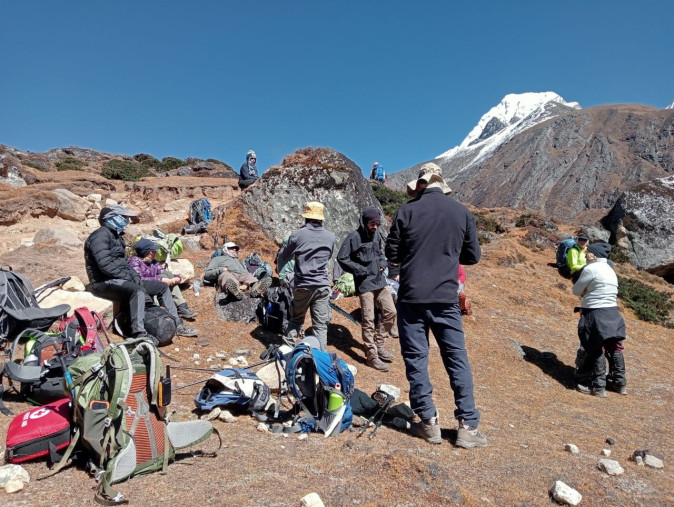
Beginners often make the mistake of trying to keep up with faster trekkers. There is no prize for reaching the lodge first. The best strategy at high altitude is to walk slowly, steadily, and comfortably. Your guide can help you find a pace that works for you. Take short breaks when necessary, drink enough water, eat properly, and communicate if you are feeling unwell. A slow walk can help you conserve energy for the entire trekking day. At Trek Ways Nepal, our guides understand that every traveler has a different walking ability. We encourage trekkers to maintain a comfortable pace rather than competing with other members of the group. Mental Preparation Is Also Important. Physical fitness is only one part of the preparation. The Everest Base Camp Trek can be mentally challenging. You may experience cold mornings, long walking days, simple mountain accommodation, changing weather, tired legs, and moments when the trail seems much longer than expected. A positive attitude helps enormously. You should be prepared to walk slowly, accept changes in the itinerary when necessary, and understand that mountain conditions cannot always be controlled. The reward is an unforgettable experience: standing among some of the highest mountains on Earth, meeting Sherpa communities, visiting ancient monasteries, crossing suspension bridges, and finally reaching Everest Base Camp.
What Makes Trek Ways Nepal Different?
Choosing the right trekking company is especially important for beginners. A local professional company can provide valuable support before and during your trek. Trek Ways Nepal is a locally operated trekking company with experience organizing trekking adventures throughout Nepal. Our team understands the Everest region, local conditions, mountain trails, accommodation, transportation, weather changes, and the challenges that travelers can face at altitude. We believe an Everest Base Camp Trek should be planned around the trekker, rather than simply following the shortest possible itinerary. Our itineraries are designed with a gradual ascent and appropriate acclimatization. We focus on allowing travelers to enjoy the trail without unnecessary pressure to walk too quickly. We also believe that the journey is as important as reaching Base Camp. The Everest region is home to the Sherpa people, and walking through villages such as Namche Bazaar and Tengboche gives you an opportunity to experience the unique culture and hospitality of the Himalayas.
What Should Beginners Expect on the Trek?
You should expect beautiful scenery but also some challenging days.You will walk through pine and rhododendron forests at lower elevations before entering the high mountain landscape. You will see traditional Sherpa villages, prayer wheels, colorful prayer flags, Buddhist monasteries, and spectacular peaks including Ama Dablam, Lhotse, Nuptse, and Mount Everest. Accommodation is generally in mountain lodges, where facilities become simpler as you travel higher. Meals are available along the trail, and your trekking team can help you maintain a regular eating and drinking routine. You should also expect cold temperatures, especially in the mornings and at higher elevations. The trek is an adventure, not a luxury holiday. But for many travelers, the simple mountain lifestyle becomes one of the most memorable parts of the experience.
Trek Ways Nepal believes that Everest Base Camp is achievable for beginners when the trek is planned properly. Our slow-paced itineraries are designed to give you time to adjust to the altitude, enjoy the Himalayan landscape, experience Sherpa culture, and reach Base Camp without unnecessary pressure. If Everest Base Camp has been your dream, you do not have to be an experienced trekker to make it happen. Prepare well, walk slowly, respect the altitude, and always choose a professional local trekking company. Your Everest adventure can begin with one step.

.jpg)

